

English Angoras, The Perfect Pet Bunny!
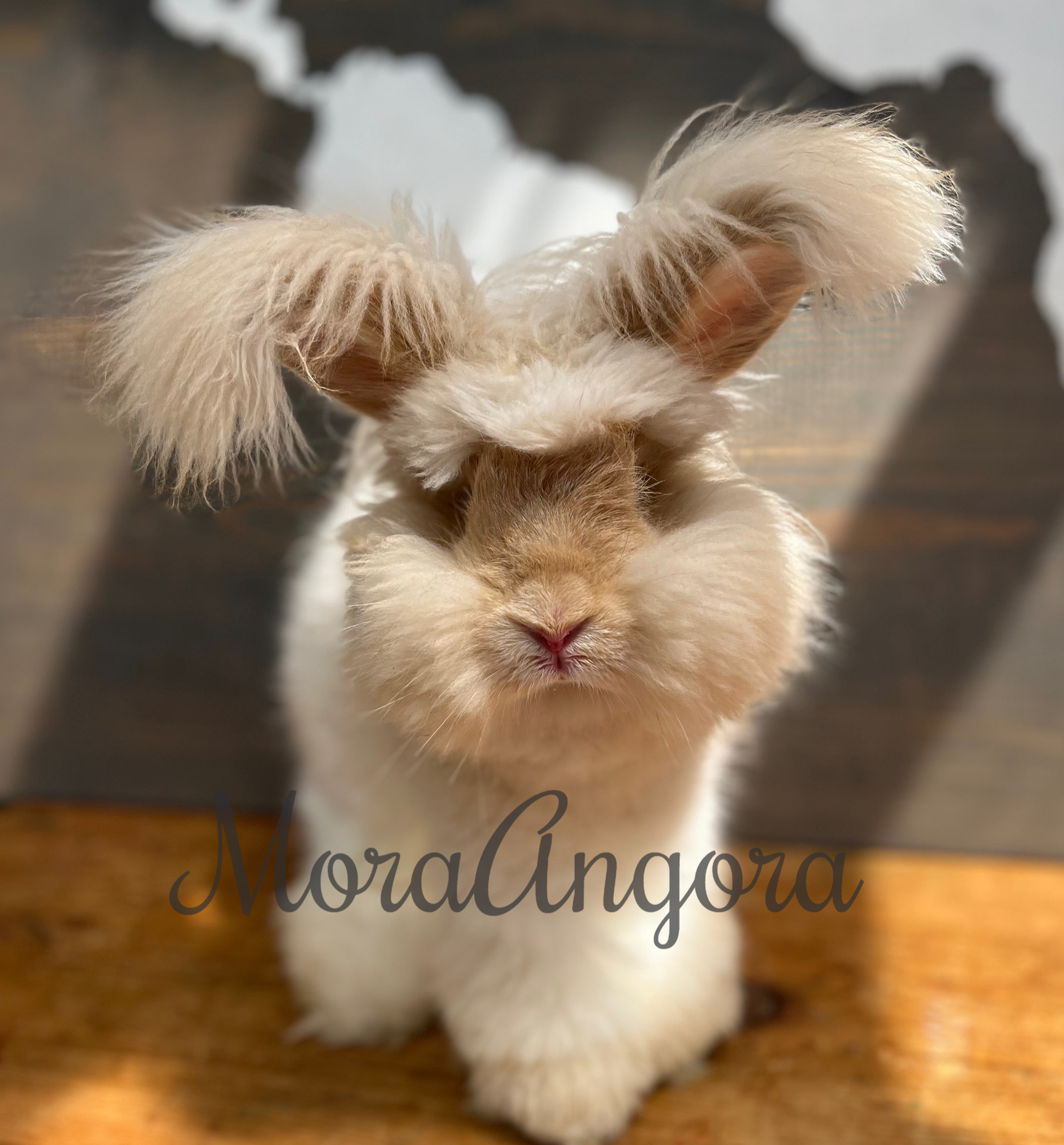
The Good, Sweet, and the Grooming.
English Angoras are special, hopefully this post will help YOU decide, if an English angora bunny, is the perfect pet bunny for you.

You have done the work, you have researched what bunnies need to have a healthy life and great living space. Now the fun begins! What kind of bunny should you get?! Please allow me to introduce you to the English Angora.
If you’ve ever scrolled through rabbit photos and thought, “That one looks like a fluffy stuffed animal!”, or "That can't be real!" there’s a good chance you were looking at an English Angora. (Or AI but so far, they haven't gotten the fluff right. :-)
These gentle, fluff balls, have a devoted following among rabbit people - for very good reasons. While breeds like Holland Lops, Lionheads, and the newer Teddywidder get a lot of attention... English Angoras deserve a spot at the very top of the “best pet rabbit” list for many homes.
Let’s chat about WHY they are the perfect pet bunny, as well as review the realistic downsides.
#7: Realistic Downsides: Because - Honesty.
#1 Personality: Dog-Like Devotion in Bunny Form
English Angoras are legendary for being calm, sweet, and extremely people-oriented. Most will happily spend hours flopped beside you on the couch, trailing you from room to room like a little woolly shadow, or gently nudging your hand because the petting stopped for 0.3 seconds and that is simply unacceptable. haha
It is amazing to see this ridiculously early in our baby bunnies. I assume it's because their mom trusts us, so trust is modeled for them... and we give them a lot of attention! The kits learn from day one that humans = safety, love and endless scratches. More often than not, the baby bunnies are pilling on top of and over each other to be the first to greet us. We pour a lot of love into them so that they can be confident and at ease to be themselves.
They will love you back—actually, obsessively English Angoras are clingy in the very best way. More than once, an adoptive bunny parent has said "She/He follows me from room to room!" They flop dramatically at feet when their person sit down, and will literally fall asleep in a lap if you let them. :-)
Before I had gotten my first English angora I saw them referred to as “dog rabbits,” or the "Puppy dog of bunnies" and after having my own... I know it’s not an exaggeration. haha
#2 The Fluff: Yes — It Requires Maintenance, But its Also Therapeutic.
Grooming can sound overwhelming at first (most new things can be) but their wool is so soft that Grooming time = bonding/therapy time. The first two sessions will take a bit longer, but once you understand the shape of your bunny, (3rd times the charm!) grooming becomes very relaxing for both bunny and owner. Their wool grows about an inch per month. You can choose to grow it out and harvest it 3-4 times per year, or to keep them at 1/2" to 1" long and just do maintenance trims every 1-2 months.
Our bunnies do not molt, some angoras do, but our lines don't seem to have this gene. This means - no hair falling out all over. If you are not interested in using your bunnies wool for spinning or needle felt crafts, there is a possibility of selling your angoras wool for $10-$18 per oz... That is $160-$280 per year! You get a fun, snuggly pet that pays their own way! If you like to craft, know that angora wool is 6x warmer than sheep's wool!
Grooming Needs if Growing Wool for Harvest:
Once their wool is 1" to 1.5" long, they require weekly grooming:
Body: preferably with a blower (10-15 minutes)
Face, Ears and Feet: rotating pin comb and scissors for a light trim and shape (5 minutes)
*Harvest trim 3-4 times a year (20-40 minutes). If you trim your bunny down short they wont need much grooming for a month or so.
The wool is the #1 thing that scares people off—and the first reason owners fall in love, The Wooly Ears! Speaking of their ears... this is a BIG advantage!
#3 Ear Health: A Surprisingly Big Advantage!
Did you know that rabbits with fully lopped (drooped) ears—Holland Lops, Plush Lops, Teddywidders, Mini Lops, French Lops, etc.—are significantly more prone to ear infections and abscesses?!
Its the anatomy of the bunnies - The folded ears, block airflow and traps moisture and wax, creating a perfect environment for bacteria. Many lop owners end up dealing with chronic ear cleanings or even with perfect care.
It may be that some breeders have selected for a body structure that is still lopped but less prone to these issues. So, if you are thinking about a lopped ear bunny, please ask about ear care.
Personally, I had no idea - until a recent bunny wellness check (so they could get on a plane). Lopped bunnies happened to come up, they are the most popular breed. I am thankful they did as I had been researching to add Plush Lops and/or Teddywidders. (Both so cute!)
However, though those breeds are both adorable, each in their own way... I will be sticking with English Angoras as I do think they are the BEST pet bunny.
English Angoras (and most upright-eared breeds) have excellent ear ventilation, so painful ear abscesses and infections are rare.
#4 Size: This One is Just Right!
English Angoras weigh 5–6½ lbs as adults—big enough to feel substantial when they flop in your lap for cuddles. They are also small enough to live happily indoors, free ranging when you are around and can have an adequate bunny space for when you are not around - without you having a huge living space.
They are also a great size to live in the same space with cats and dogs. Most of our bunnies that go live with dogs and cats end up being the boss of the animal realm. :-)
#5 Quiet: Less Destructive & Quiet
Anecdotally (and in many breeder surveys and on line forums), English Angoras tend to be one of the quietest breeds. Less thumping, less cage-biting, less dramatic stomping when offended. Not to say that it doesn't and won't happen... because it does. There is just less noise and thumping coming from angoras than most other breeds. :-)
That makes them an ideal pet bunny for apartments or houses with humans who don't want their bunny to interrupt their sleep.
#6 Bonus Reasons: English Angora is Best Pet Bunny
They make everyone they meet smile -Kids and adults alike lose their minds over the living teddy bear.
They live longer when cared for properly With diligent grooming and unlimited hay, many English Angoras reach 10–12 years. The wool protects their skin, and their calm personality means less stress-related illness.
They are photogenic, like an animal super-model status.
If you or someone you know likes to craft - they can provide the raw materials. My favorite hat is one I made out of soft, English angora wool.

#7 The Realistic Downsides: Because - honesty.
Grooming is mandatory. If you don't have time to groom them and are not able to find a groomer who knows how to groom bunnies, get a different breed. (If you don't want to deal with the lopped ears, maybe a Rex?)
Higher risk of wool block (same as any wool breed)—unlimited hay is non-negotiable. This is one of the biggest "health risks" for any wool breed bunny. However, grooming and proper diet can minimize these risks!
I've heard they poop more than other breeds, but if you have a garden, this becomes an advantage. :-)
If you are looking for a 5lb, calm, upright-eared cloud that hops around; loves you just as hard as you love them, and the downsides are not a deal breaker for you... then, congratulations!
An English Angora is the best pet bunny for you... but watch out they may just ruin all other rabbits for you... forever.

Spinning Angora Wool with Drop Spindle 
Magpie Angora Bunny 
Handspun Angora Yarn 
Chocolate English Angora 
Blue Otter English Angora 
Ermine English Angora
If you have questions, please reach out!
If you want to read more about ear health and English Angoras quiet temperament, Links are below:
Links on Quiet Temperament
Main HRS Site (Breed Recommendations): houserabbit.org – Check their "Choosing a Rabbit" section or contact a local chapter for personality surveys. Educators rank Angoras high for calm indoor living.
Related Article Echoing HRS Views: "Silent Paws: Exploring Quiet Rabbit Breeds" on AllPetWellness (2025) – allpetwellness.com/silent-paws-exploring-quiet-rabbit-breeds/. Excerpt: "The English Angora rabbit is not just quiet; it’s also one of the fluffiest breeds... Their quiet nature makes them excellent pets for smaller living spaces like apartments."
Forum Search for "Quietest Breed Apartment": forums.rabbit.org/search.php?do=process&query=quietest+breed+apartment – Leads to multi-year threads (e.g., 2019–2025) where English Angoras top polls for least noise. One recurring thread: "Quietest breed for apartment living?" consistently votes Angoras #1-2 for minimal thumping.
Subreddit Search: reddit.com/r/Rabbits/search/?q=quietest%20breed%20poll – Key threads include "Quietest Rabbit Breeds for Apartments" (2022–2025 polls) where Angoras are praised for "no drama thumping."
Example Thread: "Wondering if a Rabbit would make a good apartment pet" (2015, but still active) – reddit.com/r/Rabbits/comments/3oo51r/wondering_if_a_rabbit_would_make_a_good_apartment/. Comments highlight Angoras/Lops as quiet, with users noting "Holland lops... generally 'like' people" but Angoras as even calmer.
RabbitTalk Forum (Angora-Specific): rabbittalk.com/threads/angora-breeds-their-fiber.34843/ – Breeders discuss English Angoras as "docile" and low-maintenance temperament-wise, contrasting with more energetic breeds.
Permies Forum (Breeding Advice): permies.com/t/102755/Trouble-Breeding-English-Angora – Experienced breeders note Angoras' calm nature makes them easier for handling/grooming.
BackYardHerds Forum: backyardherds.com/threads/iso-english-angora-breeders.40980/ – Breeders emphasize "sweet & docile" personalities for family pets.
Angora Rabbitry Resources (Breeder Blogs/Forums): angorarabbit.com/articles/technical-manual/angora-rabbitry-resources/ – Lists clubs like Northern California Angora Guild, where temperament discussions (calm/low-noise) are common.
NARBC Main Site: nationalangorarabbitbreeders.com/ – Join for access to forums/Guidebook; personality sections highlight Angoras as "laid-back" with minimal stress behaviors (e.g., less stomping).
Facebook Group (Official): facebook.com/groups/551414325743991/ – Active discussions on breed traits; search "quiet apartment" for owner/breeder anecdotes.
Related Article on NARBC Breeders: "The Cuddly, Fluffy, Surreal World of Angora Show Bunnies" (NYT, 2015) – nytimes.com/2015/04/05/magazine/the-cuddly-fluffy-surreal-world-of-angora-show-bunnies.html. Excerpt: Breeders describe Angoras as having "distinct personalities" that are "torpor-like" (calm/quiet), per NARBC president Joan Hastings.
Links on Ear Health
Rabbit Welfare Association & Fund (UK) – Ear Disease in Lopshttps://rabbitwelfare.co.uk/ear-problems-in-lop-eared-rabbits/ → Clearly states: “Lop-eared rabbits are predisposed to ear base infections and abscesses because the ear canal is bent and poorly ventilated.”
House Rabbit Society – Ear Problems in Rabbitshttps://rabbit.org/health/ear-problems/ → “Rabbits with lop ears or very narrow upright ear canals are far more likely to develop painful ear infections and wax buildup.”
Medirabbit (Veterinarian-run site, widely cited by exotic vets)http://www.medirabbit.com/en/ear-diseases-in-rabbits → Excellent article with diagrams showing how the folded ear canal in lops traps debris and moisture. Specific page on otitis in lop-eared rabbits: http://www.medirabbit.com/EN/Skin_diseases/Bacterial/Otitis.htm
Veterinary Partner (VIN) – Ear Infections in Rabbitshttps://veterinarypartner.vin.com/default.aspx?pid=19239&id=1004900 → “Lop-eared breeds have a much higher incidence of otitis externa and media due to poor ventilation of the ear canal.”
Exotic Animal Veterinary Center (California) – Lop Ear Diseasehttps://www.eavc.com/rabbit-lop-ear-disease → Dr. Kanfer (exotics specialist) explains the anatomy and why upright-eared breeds almost never need ear cleanings while many lops do.
2019 Study – “Ear health in pet rabbits” (Journal of Exotic Pet Medicine)https://www.sciencedirect.com/science/article/abs/pii/S155750631930092X → Conclusion: “Lop-eared rabbits had a significantly higher prevalence of otitis externa (54%) compared to erect-eared rabbits (6%).”
2021 UK Study – Pain and ear disease in lop rabbitshttps://journals.plos.org/plosone/article?id=10.1371/journal.pone.0247525 → Survey of 1,000+ pet rabbits showed lop-eared breeds were far more likely to suffer painful ear conditions.
Reddit r/Rabbits thread (2023) – “Why do so many lops have ear issues?” https://www.reddit.com/r/Rabbits/comments/10zq3k5/why_do_so_many_lops_have_ear_issues/ → Hundreds of comments + vet quotes confirming the anatomical problem.
Rabbit.org Forum – “Ear cleaning only for lops?” https://forums.rabbit.org/t/ear-cleaning/98765 → Long-time rescuers note they almost never clean upright ears (Angoras, Rexes, etc.) but clean lop ears constantly.


Comments